

PDF
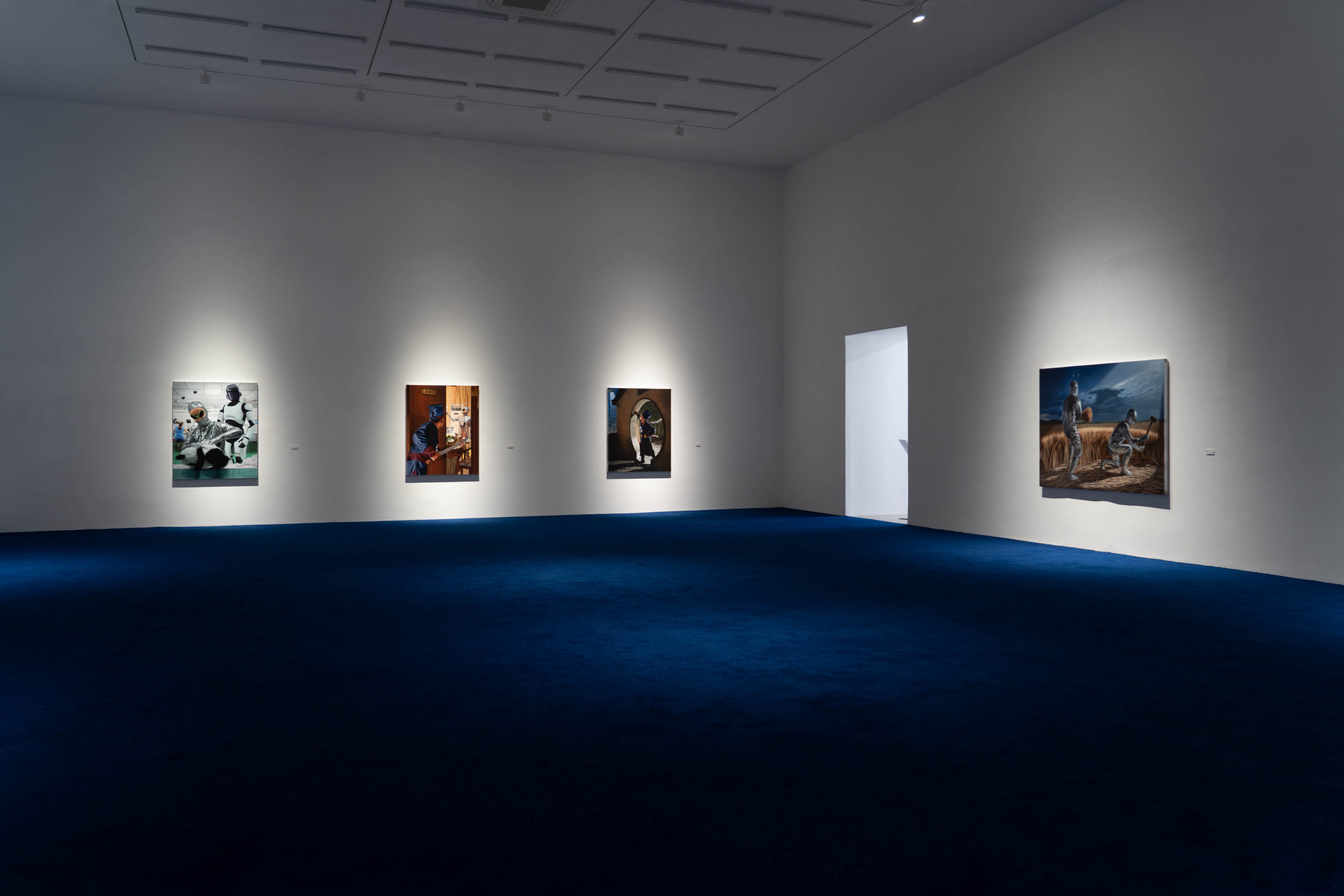
The exhibition marks the artist’s latest collaboration with the gallery following his previous solo exhibitions Satisfaction (2021) and The Pond (2024). In this exhibition, the artist employs cinematic narratives and depictions of non-human figures—“aliens”—to summon and explore the unconscious structures of desire repressed by the contemporary rational order.
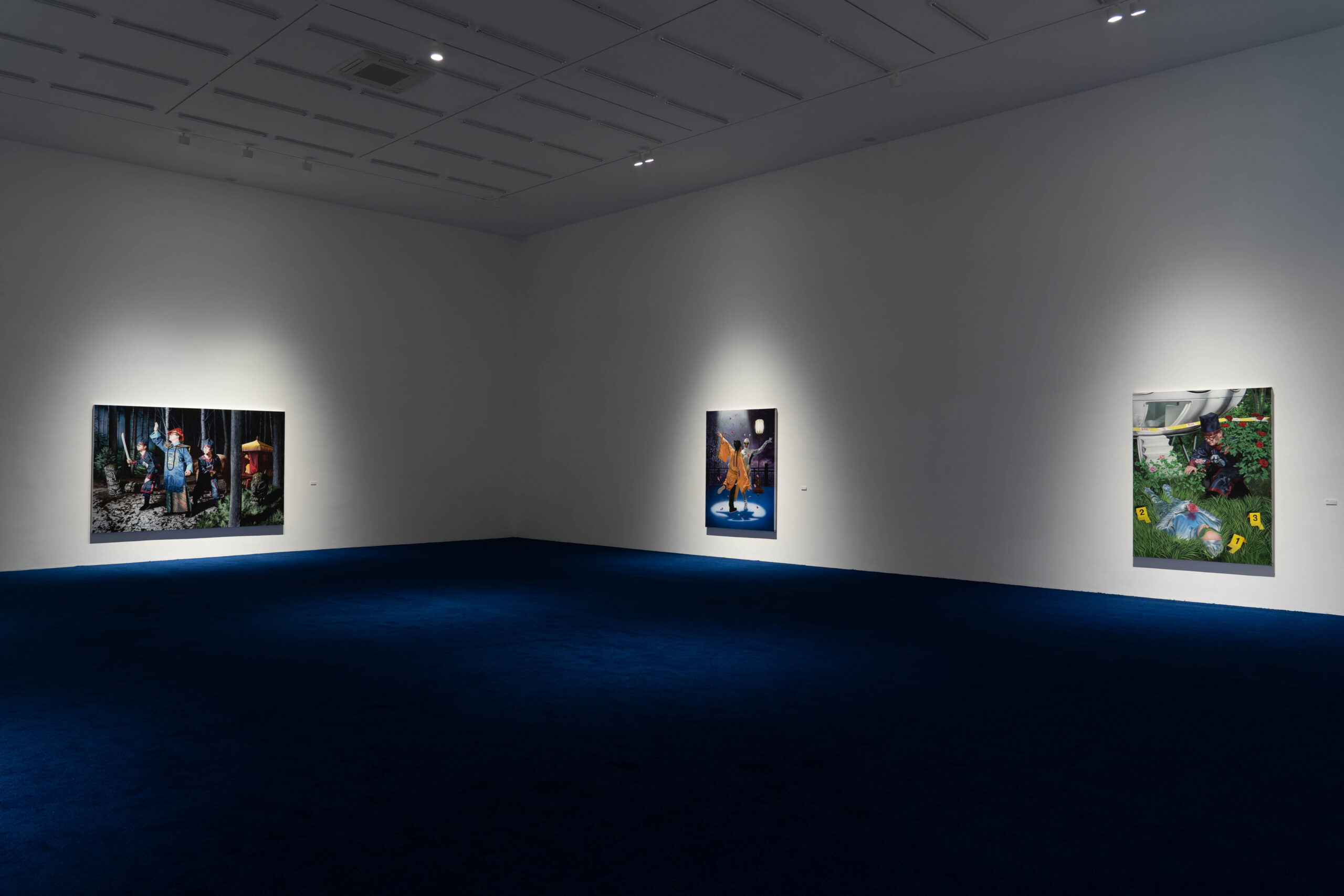
Building upon a sustained exploration of “the unconscious” through image-making, the exhibition Interpellation of an Alien appears to unveil the structure of the human unconscious imbued with cinematic narrative. Yet, the moment one applies Slavoj Žižek’s concept of “looking awry,” it becomes evident that “the devil is indeed in the details.” This notion of “looking awry” can be explained through what Žižek calls the “naked lady lighter”—an object made with holographic grating materials that necessitates a physical shift in the viewer’s gaze to reveal hidden truths. Sun Yifei’s paintings elicit a similar effect; however, what compels the viewer to “tilt” their gaze is not a shift in physical perspective, but rather a displacement of visual focus. The viewer’s attention is redirected away from the central protagonists and toward the objects of libidinal projection—the very structural arrangements that construct the framework of the unconscious.
If the image is to generate the structure of unconscious desire, then “interpellation” and “alien” as the thematic preoccupations of these paintings are by no means coincidental. The Chinese term huìshěn (会审), equivalent to “interpellation,” denotes the summoning and questioning of the accused before a tribunal, which points directly to Louis Althusser’s theory of the subject’s interpellation. The subject invoked here is not the one that René Descartes conceived as res cogitans, but rather what Jacques Lacan refers to as the subject of the unconscious. Within a neurotic structure, the unconscious subject emerges through the return of the repressed, and repression itself originates in castration as understood within psychoanalytic theory. Crucially, this operation simultaneously entails the process of “alienation.” It is therefore hardly surprising that the “alien” should become the focal point of so many works featured in the exhibition, which serve as metaphors for certain prohibited erogenous zones.
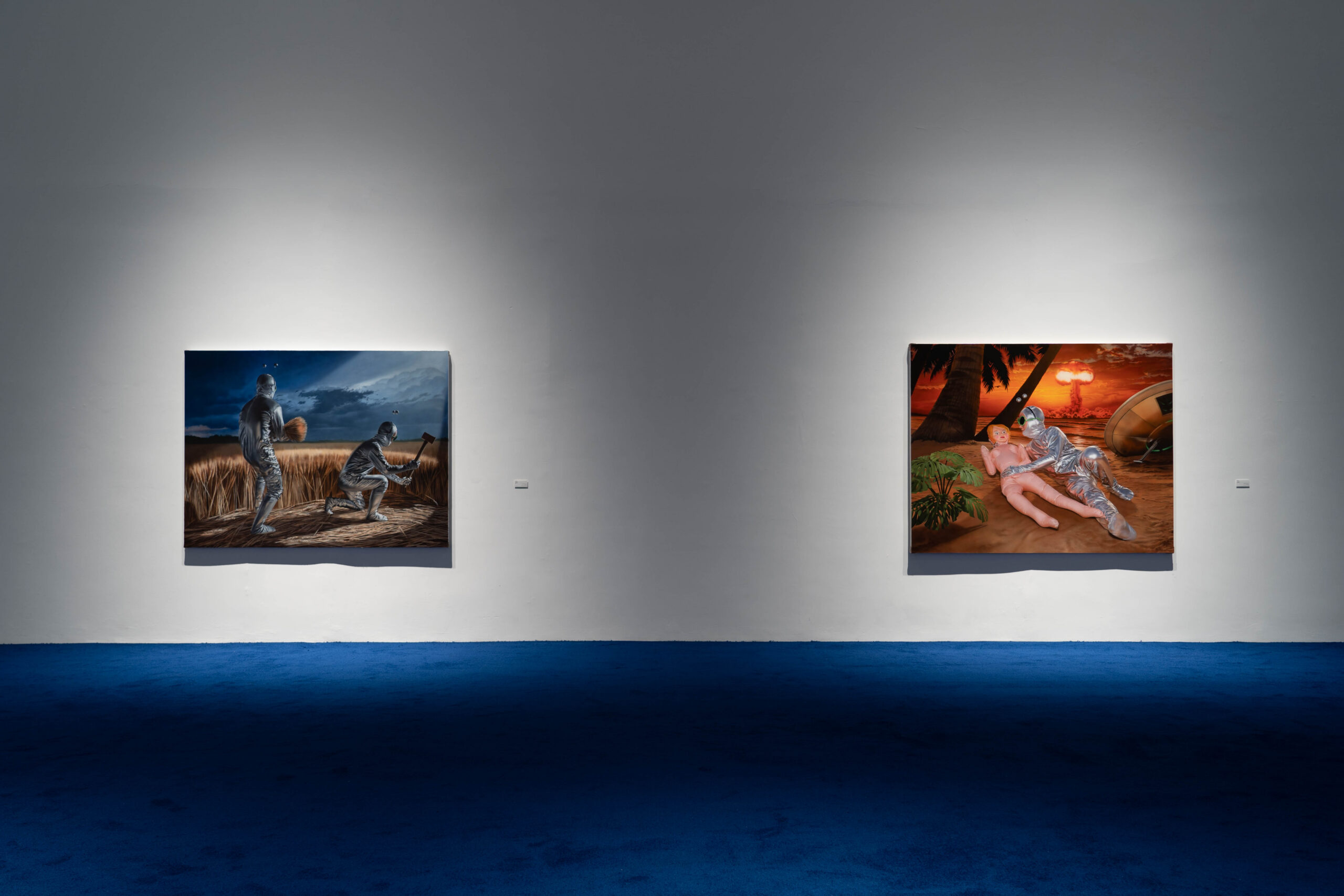
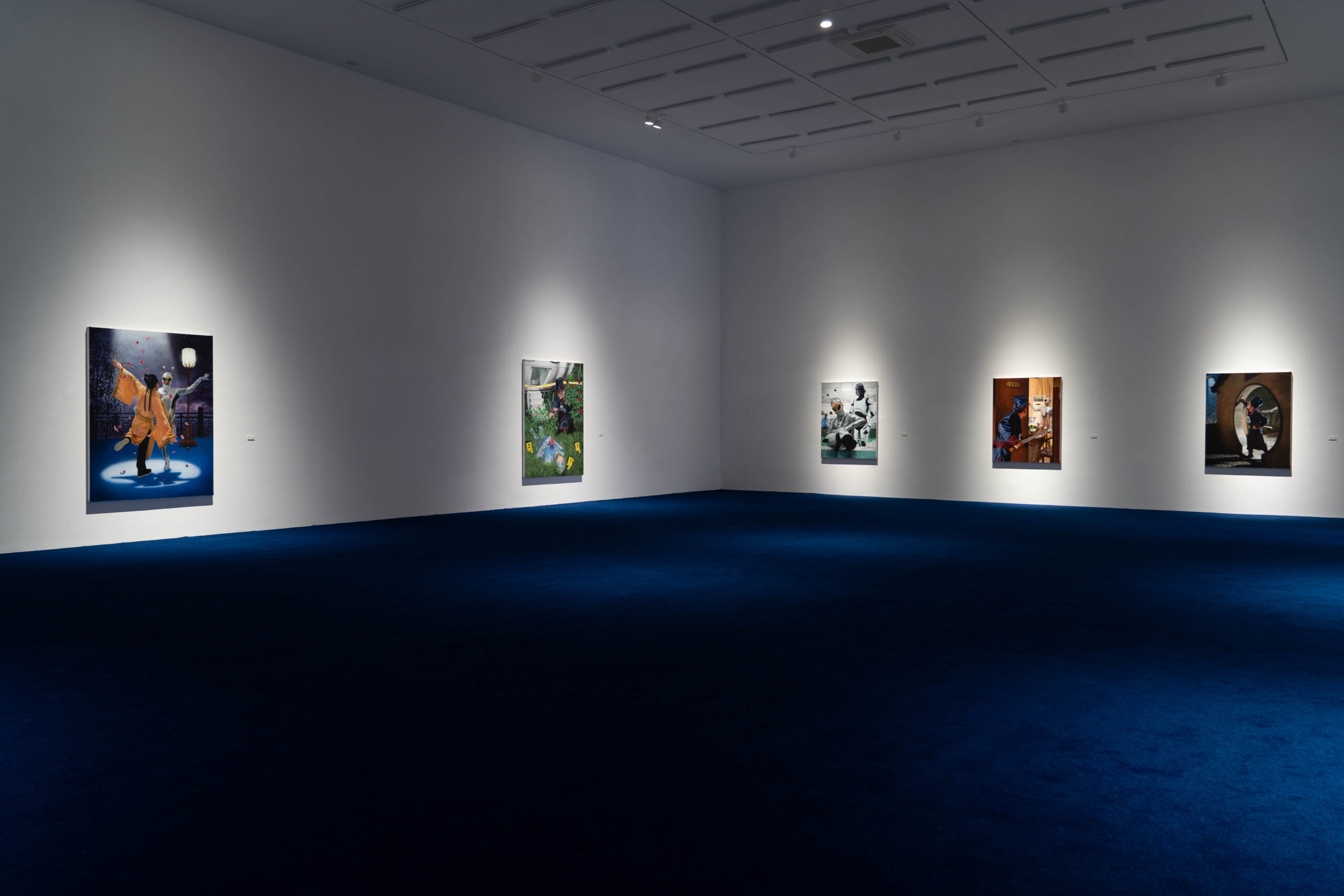
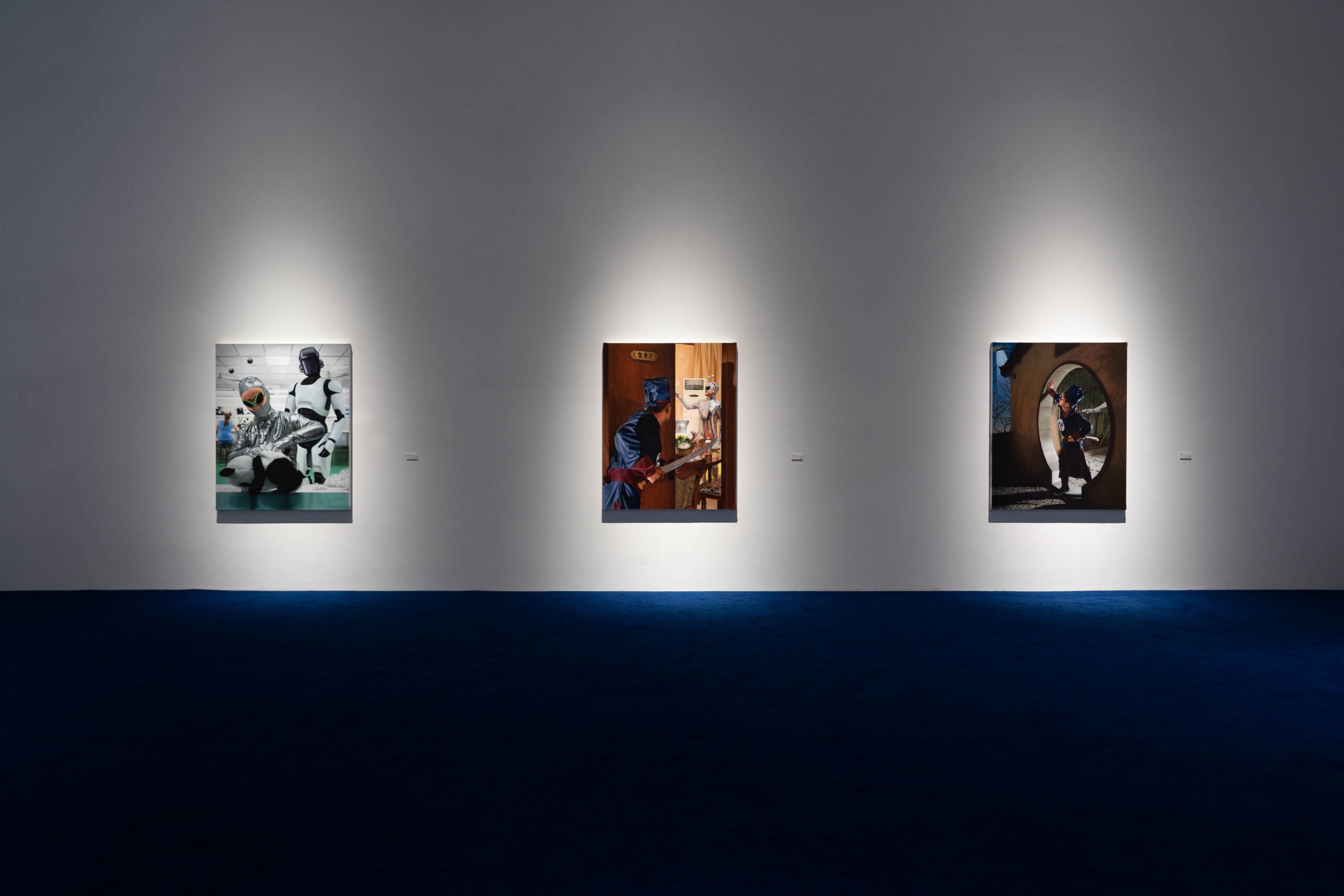
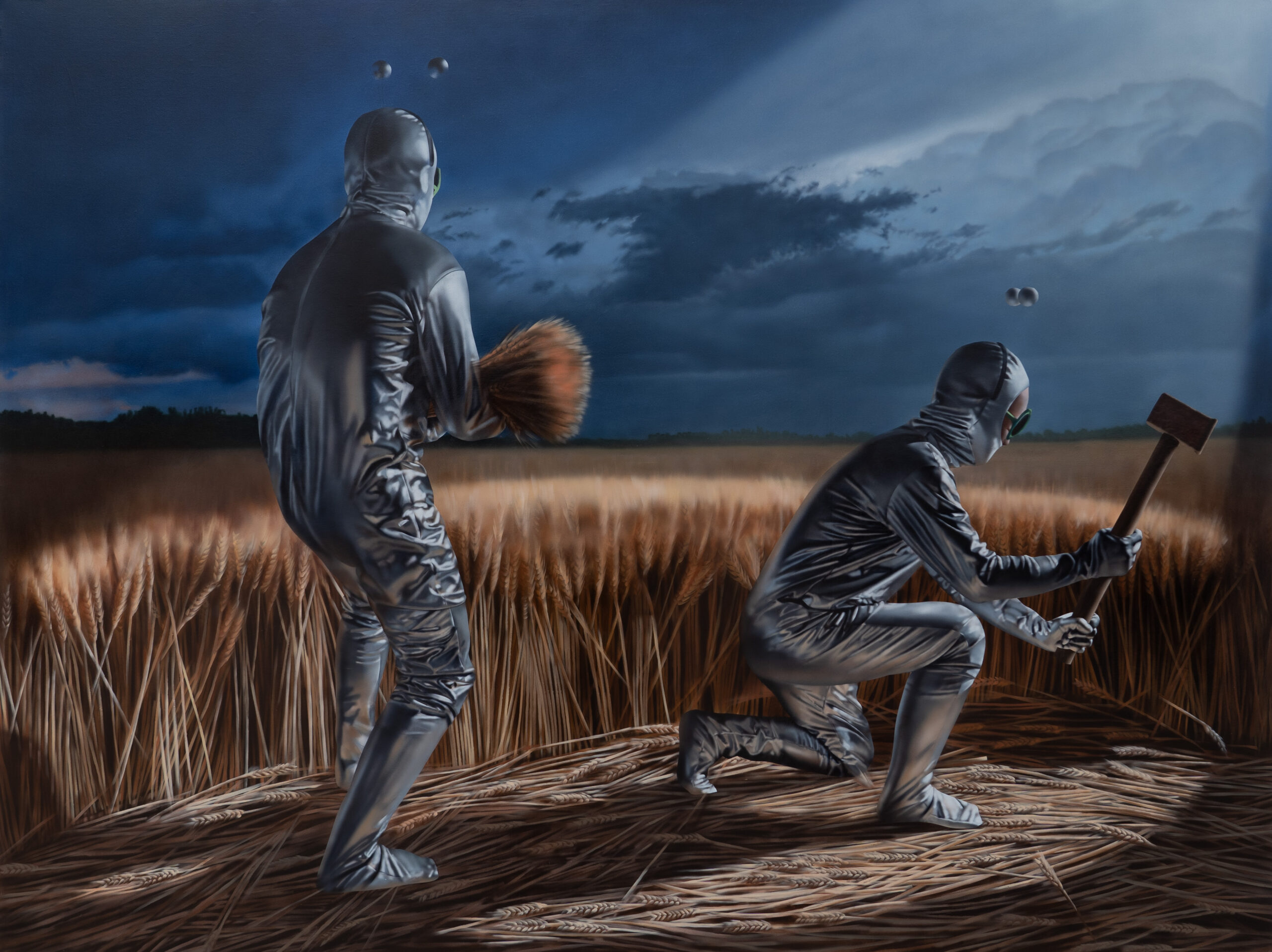
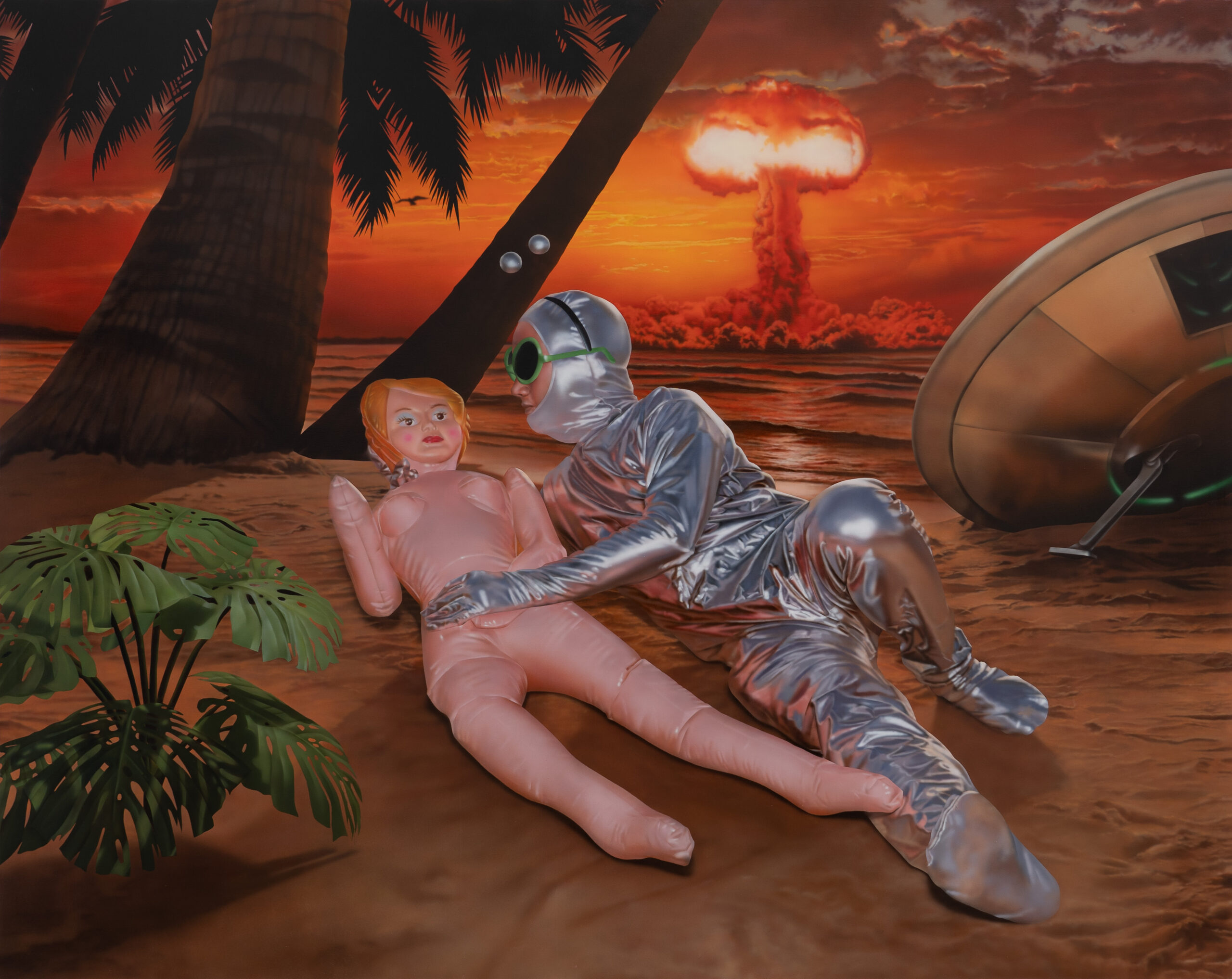
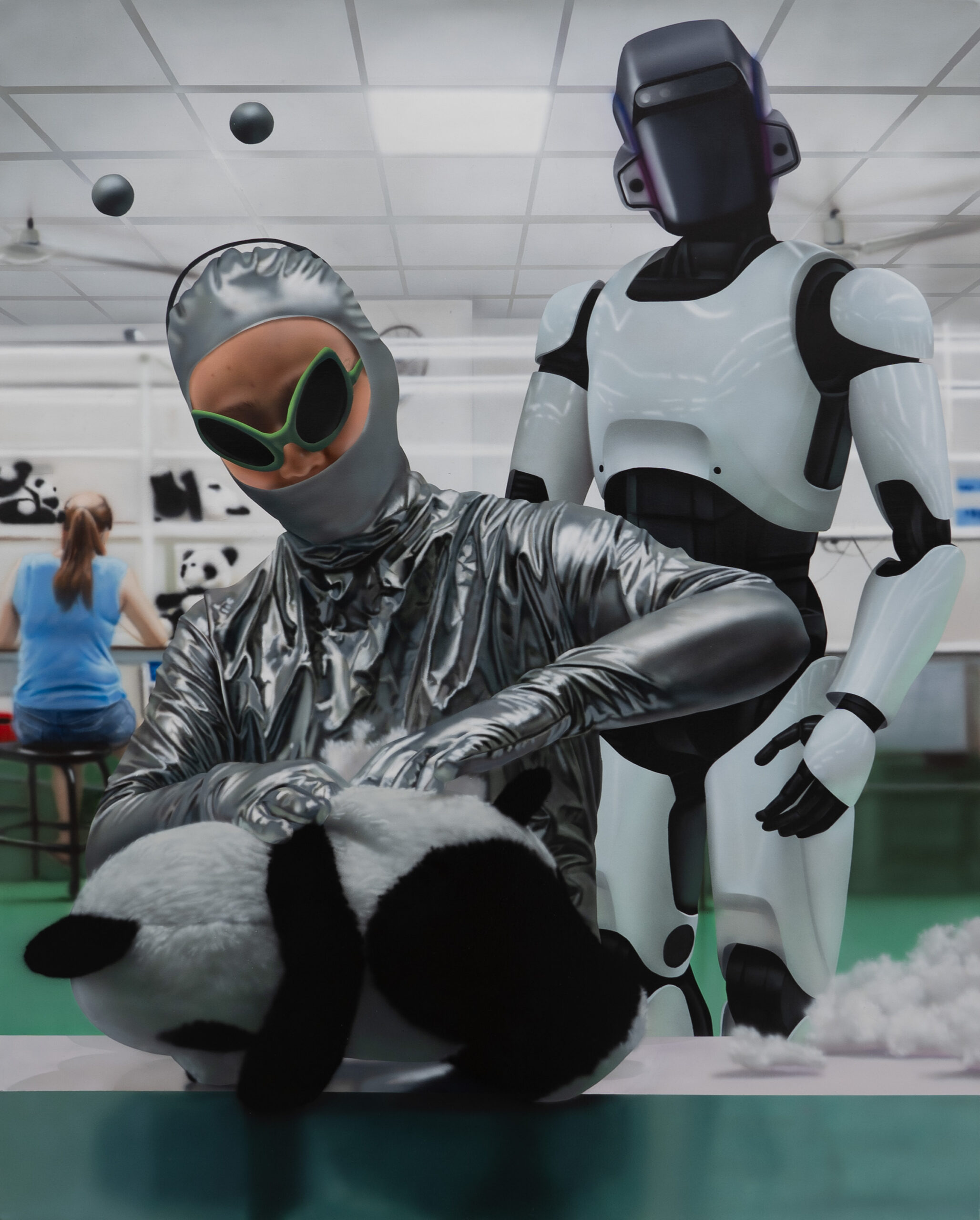
Thus, the paintings are not merely the outcome of narratives; rather, they operate by constructing a stage through which the repressed and its structural processes are summoned forth. For example, in Crop Circle Mystery, Apocalyptic Romance, and Modern Era, the artist ostensibly depicts alienated figures (such as the outsider, the inflatable toy, and the assembly-line worker). Although each work portrays common human behavior, the figures are deliberately effaced, intimating that true alienation does not stem from a “loss of humanity,” but rather from an excess of it—being “too human.” From a psychoanalytic perspective, alienation originates in the intervention of prohibition upon childhood experience, perpetually haunted by the injunction to say “no” to jouissance. In contemporary society, all ostensibly “normal” conduct must be humanized. By enveloping everything humanized in reified surfaces, the artist paradoxically re-summons the desires that have been repressed and alienated by the very dictates of “humanity.” Rather than saying that the alien has been clothed in a refined camouflage, it seems more accurate to say that our deepest desire has been wrapped in a human skin. The smooth canvas thus depicts nothing less than the core of the unconscious, reflecting what Lacan suggests: “something in you more than you.” If the true repression of desire derives from the “humanization” of life, it becomes entirely intelligible why the figures with human facial expressions in these paintings wear archaic uniforms. As Max Weber observed, the instrumental rationality of bureaucracy constitutes an “iron cage,” and these uniformed portraits are its very embodiment. At the same time, “humanization” is itself characterized by modern rational bureaucracy; once desire is locked within the iron cage, the return of the unconscious gravitates ever more insistently toward the non-human. It is little wonder that works such as La-la Land, Close Encounters of the Third Kind, and Fu Gui Hall all stage the spectacle of reified objects being gazed upon by humans.
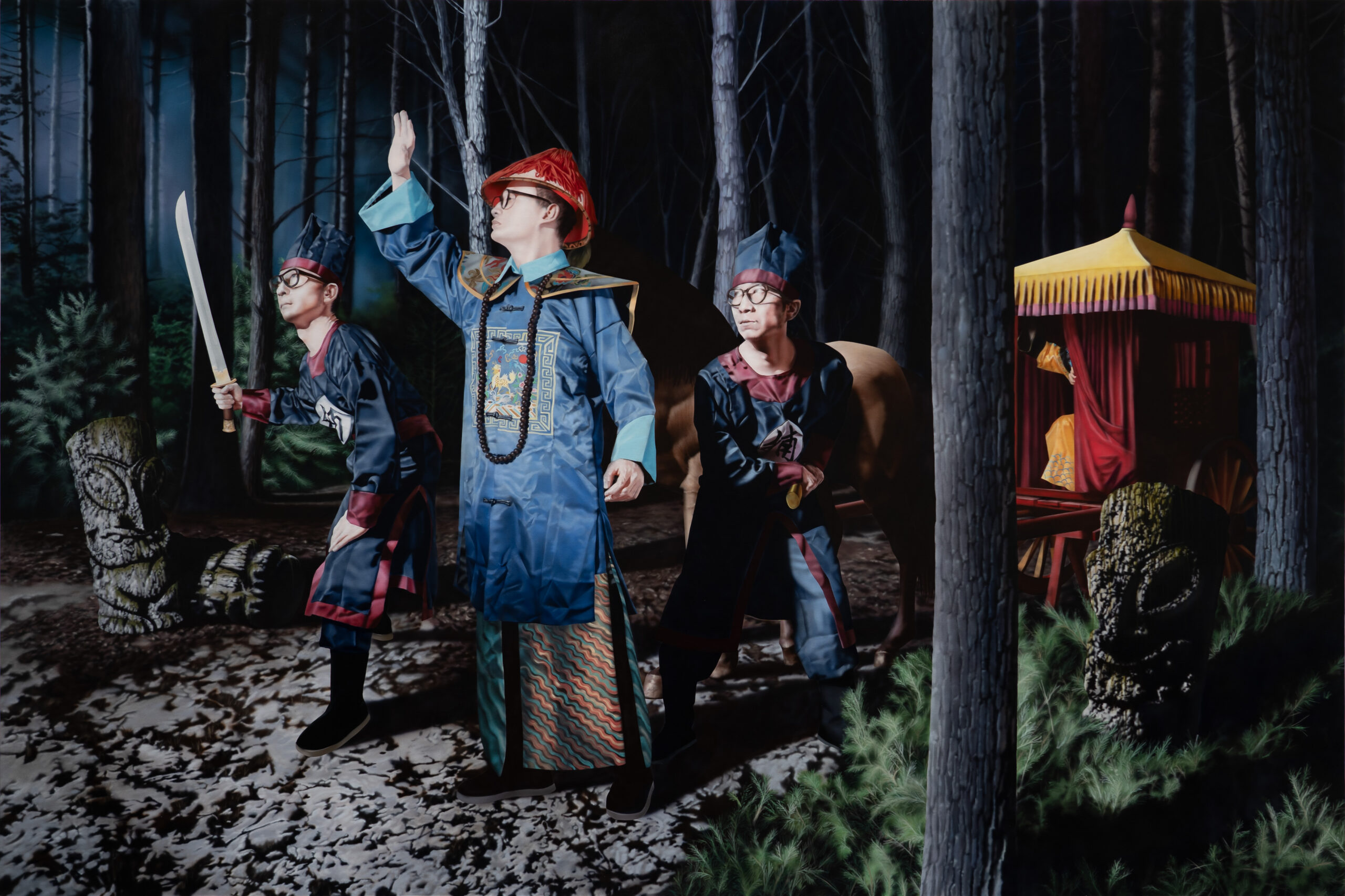
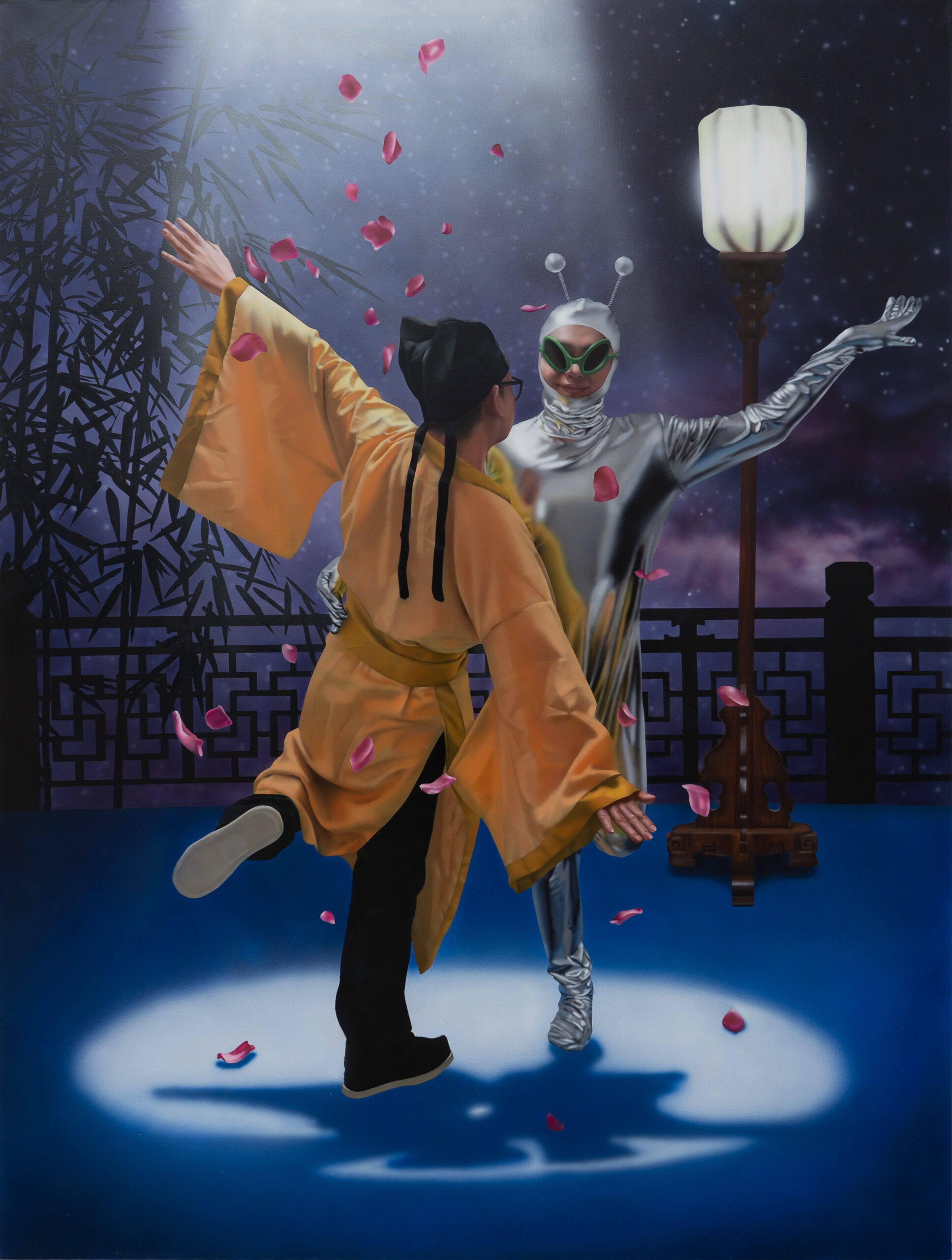
It may be argued that “smoothness” is not, as certain critics have maintained, a rejection of the sublime in art. Within a non-anthropocentric and naturalistic mode of thought, smoothness instead affirms desire. In the artist’s work, the boundary between “humanity” and “objectivity” is blurred by a smooth inflatable figure, which testifies precisely to the fact that desire originates in what medieval Scholastic philosophy termed the “disjunctive transcendentals,” as it gives rise to imagination of the ambiguous—the “true and false” and the “either/or.” It cannot be denied that the artist, through his rubber-textured, smooth “alien,” liberates the innermost core of desire that has been repressed by the humanism inaugurated by Kant; the latter having confined libidinal investment to the disjunctive position between person and object. Admittedly, this neither-true-nor-false entity tends to occupy a decentered position on the canvas, functioning much like the MacGuffin in a Hitchcock film. In Fu Gui Hall, for instance, the hot pot—upon closer inspection—simultaneously reveals itself to be the FAST (Five-hundred-meter Aperture Spherical Telescope), also known as China’s “Heavenly Eye.” A similar symbolization appears in the depiction of Sanxingdui in The Night Watch, and in the alien hand in The Peony Pavilion. Such disjunctive configurations correspond precisely to what psychoanalysis calls objet petit a—that object-cause of desire which can never be fully symbolized and which perpetually inhabits the condition of “either/or.” These “either/or” objects, much like the blue box in David Lynch’s Mulholland Drive, occupy an inconspicuous position yet nonetheless guide the trajectory of desire and resonate with the viewer’s unconscious.
Whether through the logic of “smoothness” or the technique of the MacGuffin, Interpellation of an Alien may ultimately be rendered as “the summoning of non-human desire.” The paintings present an apparent narrative logic, yet it is precisely through their various configurations that a non-narrative, unconscious structure emerges. This acute sensitivity to desire may well be rooted in the artist’s experience of being raised in the digital era—a perception of the fragmentation and dispersal of time and space that affords a deeper insight into the underlying structure of desire. Yet what distinguishes the artist from his generation is his refusal to limit himself to understanding visual experience solely through the lens of the internet; rather, he brings a sharper attentiveness to the relationship between present-day social relations and visuality, for his images often demand the viewers to shift their perspectives in order to touch upon the TRUTH that can never be confronted directly.
SELECTED WORKS
Sun Yifei
Crop Circle

Sun Yifei
Close Encounters of the Third Kind
Sun Yifei
Apocalyptic Romance
Sun Yifei
Modern Era
Sun Yifei
The Night Watch
Sun Yifei